

- Medtravellers
- 0 Comments
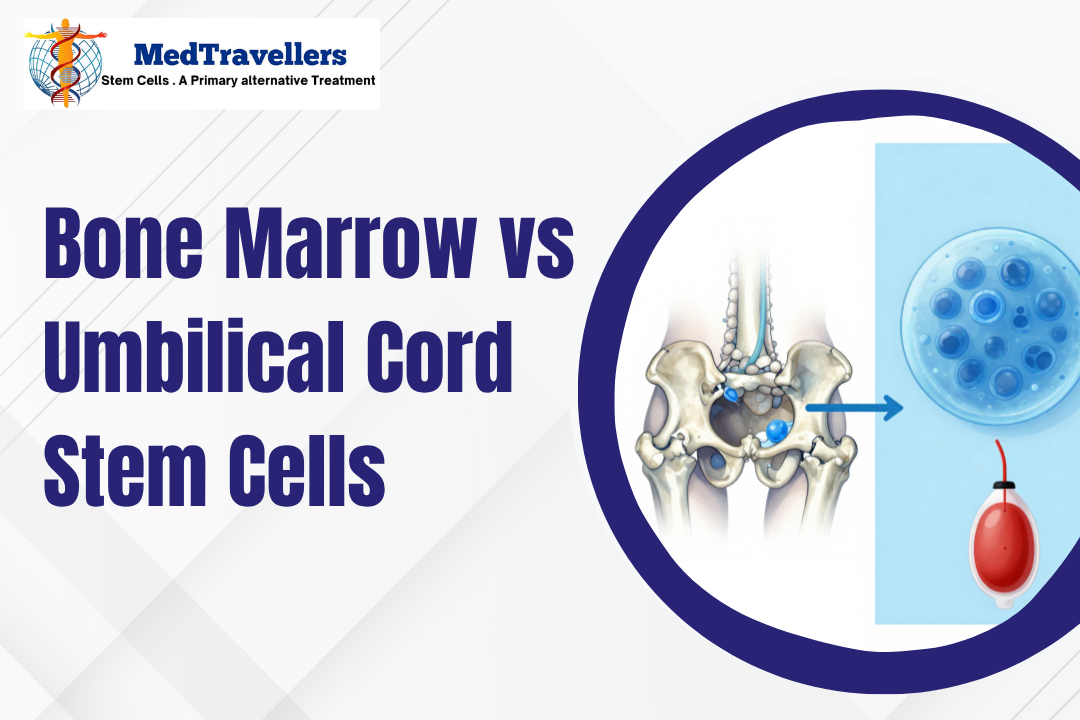
Bone marrow and umbilical cord are both clinically proven MSC sources. Bone marrow has the longer track record, particularly in haematology. Umbilical cord cells offer faster proliferation, lower immune rejection risk, and no invasive harvesting. Neither replaces the other. The right source depends on the condition, patient age, and treatment goal.
According to a specialist at Stem Cell Therapy in India, Bone marrow is the foundation. Umbilical cord cells brought new biological advantages that make them preferable in many regenerative contexts. The choice isn’t about which is superior it’s about which fits the clinical picture.
The framework that governs it:
How do bone marrow and umbilical cord MSCs actually compare?
The biological differences are real and they translate directly into clinical outcomes. Not theoretically measurable.
|
Bone Marrow MSCs |
Umbilical Cord MSCs |
|
|
Harvesting |
Invasive aspiration |
Non-invasive, collected at birth |
|
Proliferation rate |
Declines with donor age |
High, consistent regardless of age |
|
Immune rejection risk |
Moderate |
Low |
|
GVHD risk |
Higher in allogeneic use |
Lower |
|
Strongest indication |
Blood disorders, haematology |
Neurological, orthopaedic, autoimmune |
- Proliferation gap: UC-MSCs maintain expansion capacity across more passage numbers than BM-MSCs. Bone marrow potency drops with donor age, limiting autologous protocols in patients over 50.
- MHC class II expression: UC-MSCs express lower MHC class II antigens, reducing immune rejection risk. Directly relevant for autoimmune and inflammatory conditions where immune stability is already compromised.
- Paracrine output: UC-MSCs secrete more angiopoietin-1, VEGF, and neurotrophic factors than BM-MSCs. For neurological and vascular repair, that higher secretome output translates into better functional outcomes.
- Where bone marrow leads: Haematopoietic reconstitution for leukaemia, lymphoma, and aplastic anaemia. Unmatched clinical record specific to blood cell production that cord MSCs don’t replicate.
For how MSC therapy is applied across these conditions in practice, the mesenchymal stem cell therapy page covers the full clinical framework.
What actually gets tested:
Which source fits which condition in practice?
-
Source selection follows the clinical indication. The mapping below covers the primary conditions treated at MedTravellers.
- Neurological conditions: UC-MSCs. Higher neurotrophic output, better expansion, lower CNS immune rejection risk. MS, cerebral palsy, ALS, stroke cord tissue is the stronger clinical fit across all of them.
- Orthopaedic and joint disease: Both sources are used, but age matters here. Bone marrow from a 55-year-old with knee OA has lower potency than cord-derived cells from a young donor. For older patients specifically, UC-MSCs often produce more consistent outcomes.
- Autoimmune conditions: UC-MSCs again, mainly because lower MHC expression reduces the risk of aggravating immune dysregulation. Allogeneic BM in autoimmune settings carries higher GVHD risk that’s harder to manage.
- Blood and haematological disorders: Bone marrow. Full stop. Haematopoietic stem cell transplants have a 30-year evidence base built on BM and mobilised peripheral blood. Cord MSCs don’t replace this and aren’t positioned to.
Whether autologous or allogeneic treatment makes sense is a separate clinical decision that comes after full patient evaluation. Before any of that, the quality panel both sources go through is the same the stem cell quality testing blog covers what that involves.
Want to know which stem cell source suits your condition?
Connect with our medical experts today and get a personalized treatment plan tailored to your condition.
Why patients choose us:
Why choose MedTravellers ?
MedTravellers has treated 5,000+ patients from 40+ countries over 15 years, 80% improvement rate, across conditions requiring both bone marrow and cord-derived MSC protocols. Cell source selection isn’t a default at MedTravellers. Condition, disease stage, age, immune status, autologous vs allogeneic suitability all of it feeds into the recommendation before anything is proposed.
Patients don’t need to arrive knowing which source they need. That’s what the evaluation is for.
FAQ
Are umbilical cord stem cells better than bone marrow stem cells?
UC-MSCs proliferate faster, age slower, and carry lower rejection risk, making them preferred for most regenerative applications.
Is bone marrow stem cell therapy still used?
Yes. Bone marrow remains the gold standard for blood disorders and haematopoietic transplants with decades of clinical evidence.
Which stem cell source is safer for the patient?
Umbilical cord MSCs carry lower GVHD risk than bone marrow and require no invasive harvesting procedure from the patient.
Which source works better for neurological conditions?
UC-MSCs are generally preferred for neurological conditions due to higher neurotrophic factor secretion and better expansion capacity.
Disclaimer:
This blog is for educational and informational purposes only and should not be considered professional advice.