
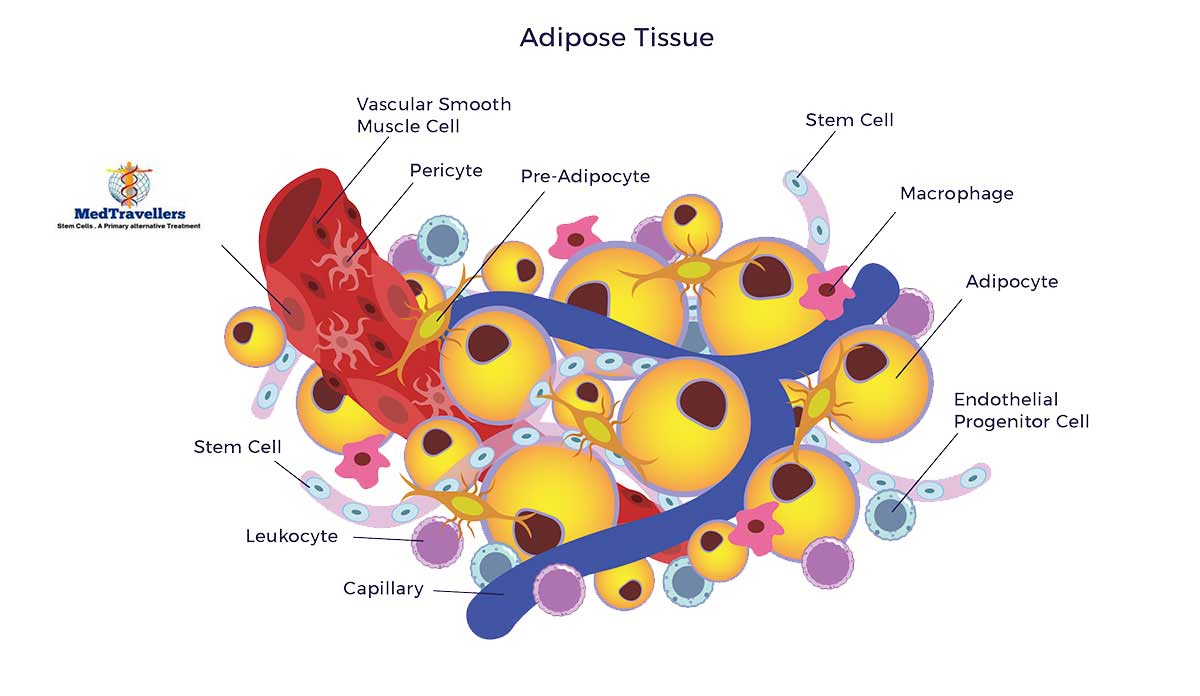
Adipose Tissue Diseases Stem Cell
Adipose tissue stem cells are identified as the next big thing in the fast-changing regenerative therapy field. At MedTravellers, we watch with great enthusiasm how this one-of-a-kind medical innovation gradually but steadily opens unprecedented treatment pathways for an extensive list of ailments. The question is, what are these fat tissue stem cells, and how far along are they in revolutionizing healthcare?
What Are Adipose Tissue Stem Cells?
Fat tissue stem cells are a type of mesenchymal stem cell that is isolated from fat tissue and is better known as adipose-derived stem cells (ADSCs). The nature of these groundbreaking cells has brought in their attraction in attention all the way from the scientific research sphere and even in hospital practice thanks to their distinctive properties and the near-terminal potential application in regeneration of damaged tissues and tissue engineering.
Core Features of ADSCs
- Multipotency: ADSCs can transform into various cells such as adipocytes, osteocytes, chondrocytes, myocytes, neurons, and endothelial cells.
- Self-renewal: They do have the potential to go through mitosis and, at the same time, sustain their stemness indefinitely.
- Cell Surface Markers: ADSCs also display cell surface antigens like CD90, CD105, and CD73, which are used for their characterization and separation.
What Makes ADSCs So Attractive?
There are lots of things that make adipose tissue stem cells prevalently appealing in the subject of medicine:
- Plentiful and Easy to Harvest: Most people have enough fat tissue, and it can be taken out quite easily through minimally invasive liposuction procedures.
- Respect of Morality: The usage of ADSCs is not without any ethical problem, unlike the case with embryonic stem cells.
- Low Immunogenicity: The cells have a low risk of immune rejection, which makes them very versatile in diverse applications.
- Release of Helpful Agents: ADSCs produce and release several factors, including growth factors and cytokines, that participate in wound healing and regeneration.
Versatility of Adipose Tissue Stem Cells to the Potential Applications of Their
The flexibility of ADSCs makes it possible to use them for a variety of therapeutic applications:
1. Tissue Engineering and Regeneration
Presently, ADSCs are the focus of attention for their potential to regenerate the following tissues:
- Bone: Potential therapy for osteoporosis and complicated fractures
- Cartilage: Maybe the treatment of osteoarthritis and joint injuries
- Fat grafting: The development of aesthetic and reparative practices
2. Wound Healing and Skin Regeneration
The capability of ADSCs to induce tissue regeneration is very important to them in the following cases:
- Wound and Ulceration Treatment
- Beautifying the skin and eliminating the scars
- Possibly, skin burns and skin grafts are added to the list of conditions that can be treated.
3. Cardiovascular Repair
Currently, the scientific research community is testing out various applications of ADSCs, which include:
- Incorporating new parts in the damaged heart area after a heart attack
- Restoring circulation for people with peripheral artery disease
- Maybe helping heart failure patients
4. Neurological Disorders
One of the main factors behind the promising future of ADSCs in nerve-related diseases is the before-pilot immediate effects:
- Regenerating nerves that have been damaged due to diseases such as peripheral neuropathy
- Driving the functions of the brain cells that are suffering from neurodegenerative diseases
- Accomplishing the support that comes in stroke and spinal cord injury recovery
5. Immunomodulation
The immunomodulatory features of ADSCs will probably be put to good use in the following cases:
- Treating autoimmune diseases such as rheumatoid arthritis or multiple sclerosis
- Helping decrease inflammation in chronic diseases of different types
- Maybe assisting transplanted organs in avoiding rejection
Current Research and Clinical Trials
Adipose tissue stem cell (ADSC) research is constantly changing and expanding. The number of clinical trials that are conducted these days is huge. The main goal of these trials is the development of new therapies based on ADSC for a variety of diseases. Some of the active research areas are
- Osteoarthritis treatment
- Cardiac repair post-heart attack
- Crohn’s disease and other inflammatory bowel conditions
- Diabetic wound healing
- Multiple sclerosis
Most of these investigations are very promising; however, it should be mentioned that these studies are preliminary stages, and further research is required to demonstrate the effectiveness and the level of safety of these treatments for a long time.
Challenges and Considerations
New technologies of this kind, as emerging medical technologies, always come along with some problems and issues.
First of all, the issue of standardization. The scientific community is currently lacking standard protocols for the isolation process of ADSCs from different tissues to achieve the same results in all the labs and clinics where they are used.
The risk of cancer is called “tumorigenicity.” Although the chance is very low, the possibility for tumors to evolve from these cells needs to be very well researched, and the patients under such therapies need to be closely monitored.
Researchers are still trying hard to come up with the best delivery methods that would result in the maximum number of ADSCs that would be able to reach the target tissues without losing their viability and effectiveness.
Long-term Data: Basically, a lot of long-term studies are required in order to comprehensively know about the safety and effectiveness of ADSC treatments that last long.
The Regulatory Landscape: It is very challenging and time-consuming to go through the regulatory approval process for ADSC therapies, just like any other new medical treatment.
The MedTravellers Perspective
MedTravellers is all about bringing patients closer to pioneering medical treatments globally. While most adipose tissue stem cell therapies are still not mature and have not yet been put into practice, a few clinics and hospitals have started to offer therapies that were approved or are in the clinical trial phase.
If you want to go for adipose tissue stem cell therapy, then here is what you must do:
- First of all, get in touch with expert doctors and undergo proper tests to make sure you are the suitable candidate for the therapy.
- Keep yourself updated with the current progress of research regarding your condition.
- Pick out the facilities that are accredited and the ones that have competent medical teams to take care of you.
- Pre-adipocyte stem cells are definitely the way to a bright future. However, done with care, taking into account the present situation, to underline and more firmly reinforce this awareness, the possible upside is constantly heard in conjunction with the yet limited state of the art in science.
Looking to the Future
MedTravellers is thrilled with the monumental advancements in the field of ADSC research, which is essentially evolving as a futuristic technology. The use of stem cells from fat can be a powerful medicine in the future for the cases of tissue regeneration and immune system modulation.
While keeping an eye on this exciting world of development, we always remind our clients that our mission to be a reliable and informed global partner in the facilitating of cutting-edge medical treatments is as strong as ever. Stay tuned for more updates on the progress of adipose tissue stem cell research and its applications in regenerative medicine!
FAQs
What are adipose tissue stem cells (ADSCs)?
One of the sources of mesenchymal stem cells (MSCs) is body fat, from which stem cells called adipose tissue-derived stem cells (ADSCs) are isolated. They are multipotent cells, which do so by differentiating into bone, cartilage, skin, nervous, and muscle cells, thus also performing the function of self-renewal. Their versatility is the main reason these cells are so highly regarded when it comes to their use in regenerative therapies, for example.
Why are ADSCs considered important in modern medicine?
The human body is hardly more than 10 kilos of pure cell matter, which is, however, abundant with stem cells if one knows the difference between stem cells and differentiated mature cells. ADSCs indeed are a plentiful source in the human body, and their harvesting is a relatively simple endeavor not requiring general anesthesia, akin to liposuction of less than 500 ml. Compared to other stem cell sources, they provide higher output capabilities, immune rejection is less likely, and they also can produce growth factors that would help the damaged tissue overgrow, and the consequential inflammation would be less, and so on.
What conditions are ADSCs currently being studied for?
These are the stem cells that have been in the papers for a long time. They are very young, and the most dramatic are the metatarsal fractures. As well as osteoporosis. Besides that, chondrogenic repair of osteoarthritis is also going to be included in the range. Now ADSCs are also involved in therapy for atrophic skin but also in wound research. The cardiovascular field uses them not only after heart attacks but also for myocardial infarction. The central nervous system includes stroke and spinal cord injury besides the peripheral nervous system and stem cell transplantation. As a result of trials, their success can even be seen in circulation improvement and chronic inflammation reduction.
What are the main challenges with ADSC therapy?
Even though experiments with ADSCs have shown great potential, their clinical use is still in an embryonic stage. Among the problems with ADSC therapy, there always has been the issue of lack of consistency in techniques meant for cell isolation and handling, the risk of tumors developing being there albeit minimal, and most importantly, the biggest safety concern is related to the delivery site and the survival of these cells after transplantation. Moreover, studies on the long-term safety of these cells are limited, and the processes of regulatory approval are complicated and far from over before they can find use in everyday medicine.